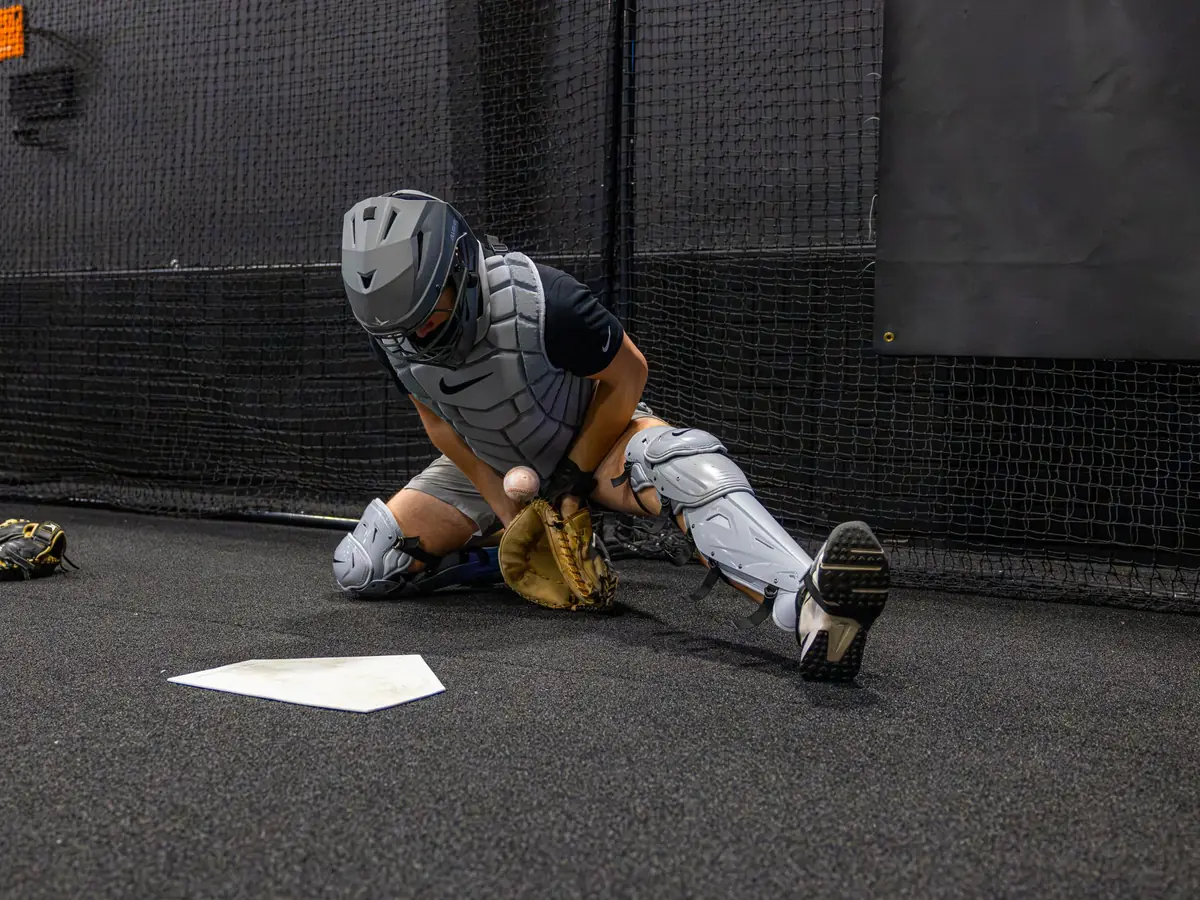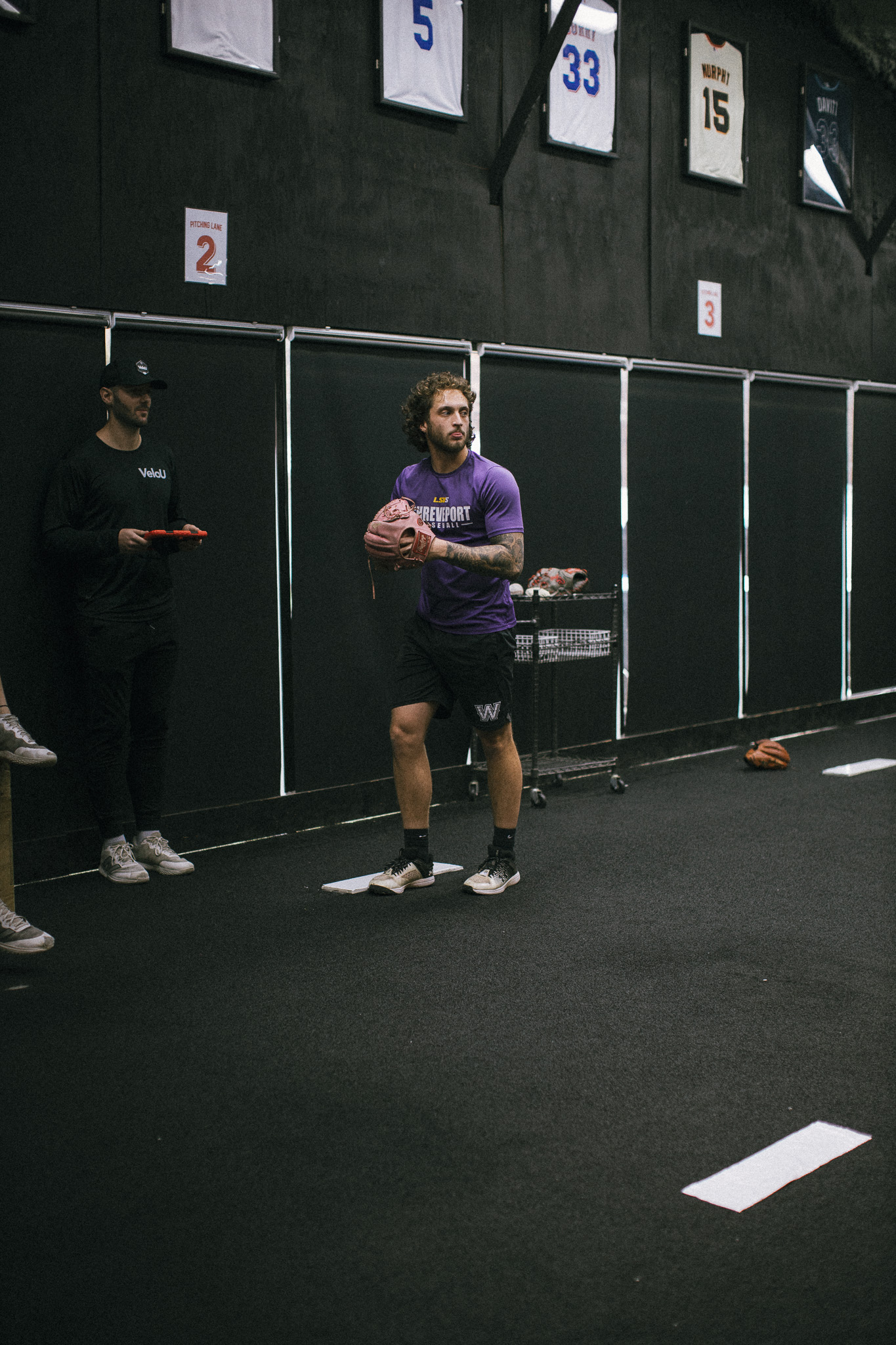

Winter break can make or break a college pitcher's spring. You're away from your team's staff and schedule for weeks, right before the season. Pitchers who use that time well show up to spring practice ready. Pitchers who don't spend February catching up.
Here's how to structure a winter break throwing program so you keep your gains, stay healthy and walk back into the facility ahead of schedule.
Before break, ask your pitching coach what they want from you. Find out where you are in your throwing progression, what your coach wants you to work on and what your workload should look like over the next few weeks.
If your school doesn't give you a detailed plan, get one. A pitching evaluation over break is one of the best ways to find out what will make the biggest difference before spring.
The most common winter break mistake is going too hard too fast after time off. Throwing at full effort before your arm is ready puts stress on the rotator cuff, the UCL and the tendons around the elbow.
If you've taken time off, the first 4-6 weeks of throwing should never be max effort. A typical ramp-up looks like this:
Your exact progression depends on your history, your workload and where your team is in its schedule. Read more about building a throwing ramp-up program.
Strength is one of the biggest drivers of velocity, and it's the first thing to slip when pitchers go home. Find a gym, bring your program and keep your lifts on schedule. Your strength work and your throwing should progress together, so you aren't adding heavy lifting and max-intent throwing in the same week.
Arm care is easy to skip when nobody is watching. Keep your band work, mobility and recovery routine going every week. If you can, test your arm strength before and after break so you know you're coming back stronger, not just rested.
Without your team's staff around, video is how you stay honest. Film your flat grounds and bullpens from the side and from behind. Compare them to video from the fall. If something looks off, you want to catch it in December, not in February.
Most college pitchers are home for several weeks. That's enough time to make real progress with good coaching, or to lose ground without it.
VeloU works with college pitchers in two ways over break:
"Training remotely with VeloU over the past four years has completely transformed my game... In my first start of the 2025 season, I consistently hit 95-97 mph." — Dylan Vigue, University of Michigan, drafted by the Kansas City Royals in 2026
Every athlete's plan should be built around their own evaluation and their team's schedule. As a general shape, a winter break week for a college pitcher might include:
Talk with your school's coaches before changing anything big. The goal is to arrive in spring ready for their plan, not to compete with it.
Most should, but it depends on where you are in your throwing progression and what your school's staff wants. Ask your pitching coach before you leave campus.
After time off, plan on 4-6 weeks before max-effort throwing. Your exact timeline depends on your history and workload.
Yes. College athletes train on-site in Pleasantville while they're home, and many switch to remote training when they go back to school.
Yes. Incoming college pitchers use the months before their first season to get stronger and arrive on campus ready to compete.
Home for break? Start with an evaluation, or see how VeloU Remote works if you're not near Westchester.