New Year’s Holiday Sale: ends december 31st

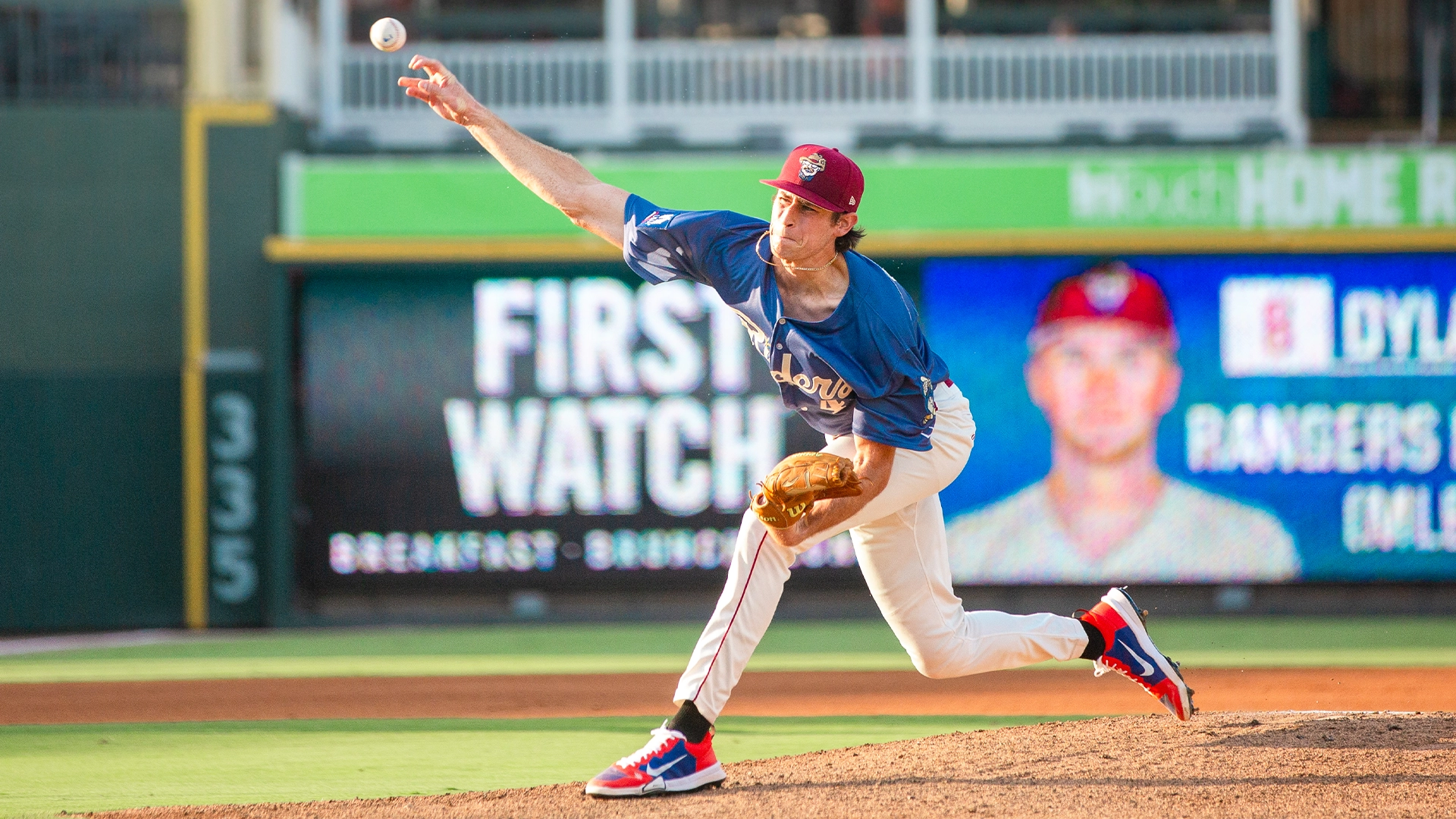
The lead leg block, that aggressive extension of the front knee upon ground contact, has long been regarded as a cornerstone of efficient pitching mechanics. Coaches preach it. Biomechanists measure it. But here's the problem: what works for professional pitchers doesn't always translate to younger athletes. In fact, the same mechanical pattern that helps pros throw harder with less elbow stress can actually increase injury risk in high school pitchers. Even more, the way that pattern should look (the degree of extension, the timing, the front-side positioning) isn't universal. It depends on the athlete's structure, strength, and movement biases.
A recent study published in The Orthopaedic Journal of Sports Medicine analyzed 100 pitchers (50 professional and 50 high school) using 3D motion capture to explore the relationship between lead knee extension, ball velocity, and elbow varus torque. The findings revealed a critical nuance that every coach, parent, and athlete needs to understand: increased lead knee extension improves velocity across all levels, but the efficiency of that extension determines whether elbow stress is mitigated or magnified.
The research team divided both professional and high school pitchers into high and low lead knee extension groups based on whether their extension was more than 0.5 standard deviations above or below the group mean. Each pitcher threw 8 to 12 fastballs at game-like effort while an 8-camera motion capture system tracked their every move at 480 frames per second. The fastest pitch from each athlete was used for analysis, and the results painted a fascinating picture of how the lead leg functions differently across skill levels.
At foot contact, every pitcher landed with similar knee flexion, roughly 43 to 50 degrees, regardless of age or skill level. This has been confirmed across multiple studies and suggests that initial landing mechanics are fairly universal. But as the pitch progressed from foot contact through ball release, the differences became stark. Professional pitchers in the high extension group were able to extend their lead knee by an average of 33 degrees, moving from that flexed landing position into full extension with velocity and purpose. High school pitchers with high extension managed only 18 degrees of total extension, nearly half of what the pros achieved. Even more telling, the high school low-extension group actually continued flexing their knee after foot contact, never achieving meaningful extension at all.
The velocity data told an expected story: more extension meant more speed. Professional pitchers with greater lead knee extension threw at 39.8 meters per second compared to 39.3 for their low-extension counterparts, a difference of about 1 mile per hour. High school pitchers showed an even larger gap, with the high-extension group reaching 34.1 meters per second versus just 31.2 for the low-extension group, a difference of nearly 6.5 miles per hour. Across all 100 pitchers, the regression analysis revealed that for every single degree increase in lead knee extension, ball velocity increased by 0.47 meters per second, or just over 1 mile per hour.
But here's where the story takes a turn. When the researchers examined elbow varus torque (the rotational force that stresses the ulnar collateral ligament and is directly linked to Tommy John surgery), the professional and high school groups diverged completely. Professional pitchers with high lead knee extension actually experienced lower elbow torque than their low-extension peers: 85.3 Newton-meters compared to 95.4. The lead leg block was doing exactly what it was supposed to do, transferring energy efficiently through the kinetic chain and sparing the elbow from compensatory stress. High school pitchers, however, showed the opposite pattern. Those with greater lead knee extension generated higher elbow torque: 64.2 Newton-meters versus 56.3 for the low-extension group. They were getting the velocity benefit, but paying for it with increased joint stress.
The lead knee extension velocity data reinforced this pattern. Professional pitchers in the high-extension group extended their knee at an average rate of 409 degrees per second, compared to 187 degrees per second in the low group. High school pitchers followed a similar trend (270 degrees per second for high extension versus 124 for low), but the gap between high school and professional athletes was massive. This rapid, forceful extension creates the braking effect that allows the pelvis to rotate over a stable base, transferring momentum through the trunk and into the throwing arm. But that braking effect only works if the rest of the kinetic chain is sequenced properly and strong enough to handle the forces being generated.
This study exposes a fundamental truth about pitching development: mechanics are not one-size-fits-all, and what works at the highest level can be dangerous when applied prematurely. The reason professional pitchers benefit from aggressive lead knee extension while high school pitchers get hurt comes down to three interconnected factors: strength, coordination, and kinetic chain sequencing.
Professional pitchers possess significantly greater lower extremity strength and muscle mass, which allows them to elicit elite braking forces and redirect ground reaction forces more effectively. When the lead leg hits the ground and extends forcefully, it creates a massive braking impulse that then elicits an energy transference back up the chain to the trunk conduit. If that strength in the lower half is not present, the energy either dissipates into the ground or forces compensations upstream. This finding aligns perfectly with research by Luera and colleagues, who demonstrated that professional pitchers generate more velocity with less relative elbow torque by using greater trunk and pelvis rotation, while high school pitchers rely more on arm speed. In their study of 37 high school and 40 professional pitchers, they found that high school pitchers who threw harder also produced the highest elbow torque relative to body size, while professionals used coordinated trunk and pelvis rotation to offload stress from the arm. The lead leg is the foundation of that rotational sequence. Without it, the arm becomes the primary velocity generator, and elbow torque skyrockets.
The second critical factor is coordination and sequencing. Professional pitchers have spent years refining the temporal relationship between their lower body, trunk, and arm. The lead knee extends at precisely the right moment to create rotational energy that flows through the pelvis and trunk before reaching the shoulder. High school pitchers, even when they achieve meaningful lead knee extension, often mistimed that extension relative to trunk rotation. Research by Glover and colleagues on drive leg and stride leg impulse in youth pitchers showed that the drive leg transfers linear power while the stride leg creates rotational power, and both must be coordinated for efficient pitching. In their study of 24 pitchers aged 9 to 13, they found that drive-leg peak ground reaction force correlated with energy flow into the pelvis and trunk, while the stride leg contributed to rotational power transfer across the trunk-arm link. When this coordination breaks down (when the lead leg extends too early, too late, or without proper trunk sequencing), the arm compensates by generating velocity through increased internal rotation velocity and varus torque.
The third factor is fatigue and its impact on lower body function. A study by Johnson and colleagues on muscular fatigue in adolescent pitchers revealed that hip strength and coordination deteriorate rapidly during throwing. After just 35 pitches, pelvic rotation velocity dropped by 2.3 degrees per second per pitch, torso rotation angle decreased by 1.3 degrees at ball release, and hip-to-shoulder separation dropped by 1.4 degrees. This suggests that even when high school pitchers start a game or bullpen session with decent lead leg mechanics, those patterns degrade quickly under fatigue. The lead knee may still extend, but the velocity, timing, and stability of that extension changes, disrupting the kinetic chain and forcing the elbow to absorb more stress. Professional pitchers, with superior conditioning and muscular endurance, maintain their sequencing and lower body function far deeper into high-workload scenarios.
The practical takeaway is not that high school pitchers should avoid lead knee extension. Rather, they need to earn the right to use it effectively. Simply coaching a young pitcher to "extend the front leg" without addressing the underlying strength, mobility, and sequencing deficits is like teaching someone to throw a slider before they can locate a fastball. The movement might look right on the surface, but the stress distribution will be all wrong.
Start by understanding the structural biases of the athlete, because this will indicate what the front side block should look like: closed, open, or some variation in between. Not every pitcher's lead leg mechanics should look identical. Body type, hip structure, and movement preferences all influence how the front leg stabilizes and redirects force. Once you understand those biases, assess where the athlete is physically through force plate testing or other forms of strength and power analysis. This gives you objective data on how much force they can produce, how quickly they can produce it, and whether there are asymmetries between legs that might compromise the kinetic chain. From there, provide strength and power development interventions to ensure the athlete can produce enough braking force to redirect energy back up the chain. This is a critical distinction: we don't absorb energy at the front leg. We produce stopping energy. The lead leg doesn't act like a shock absorber that dissipates force into the ground; it acts like a springboard that redirects momentum into rotation. Training must reflect that reality.
Next, prioritize sequencing drills that teach the kinetic chain to move in the proper order. Constraint drills like throwing from the knee or half-kneeling positions force pitchers to feel trunk and pelvis rotation without relying on lower body power. From there, incorporate highly challenging coordination-based patterns like athletic-style throwing to force the athlete to transfer energy up the chain from a multitude of positions and variables. Throwing off one leg, from unbalanced positions, with rotational constraints, or while moving dynamically teaches the nervous system to sequence efficiently under unpredictable conditions. This variability builds adaptability, not just repeatability. In addition, ensure there are always external objectives and cues: velocity targets, specific locations, multiple targets, or competitive scenarios. The brain organizes movement around outcomes, not positions. Telling a pitcher to "extend your knee at 60% of the pitch" is far less effective than saying "hit 85 on the gun" or "back door this fastball on the black." The sequencing will self-organize when the task demands it.
Research has indicated that pelvic fatigue shows up long before any other signs and can create massive issues from both a velocity and coordination-based perspective. When the pelvis slows down, the trunk compensates. When the trunk compensates, the arm takes over. And when the arm takes over, elbow torque skyrockets. This is why monitoring lower body output during throwing sessions is just as important as tracking arm stress. As we do with the arm, we must focus on progressively overloading the work we do from the lower half to ensure that fatigue resistance transfers to the game. This means building not just peak force production, but the ability to produce that force repeatedly over 80 to 100 pitches. Lower body conditioning (whether through higher-volume plyometrics, repeated sprint work, or extended throwing sessions with velocity tracking) prepares the hips and legs to maintain their role in the kinetic chain deep into competition. Without that work, even well-sequenced mechanics will degrade under fatigue, and the lead knee extension pattern that looked efficient in a bullpen will turn into a liability in the sixth inning.
Finally, avoid chasing velocity gains through isolated mechanical changes. The lead knee extension pattern observed in this study was associated with faster ball velocity, but that relationship worked differently depending on the athlete's physical preparation and movement competency. For high school pitchers, adding 1 to 2 miles per hour by forcing greater lead leg extension might come at the cost of 8 to 10 Newton-meters of additional elbow torque. Over the course of a season, that adds up to thousands of high-stress throws. Instead, focus on building a more complete athlete, one who has the strength, coordination, and durability to access efficient mechanics naturally as they develop.
The lead leg block is not inherently good or bad. It's a high-level mechanical pattern that requires physical and neurological readiness to execute safely. Professional pitchers, with their superior strength, refined sequencing, and years of motor learning, can extend the lead knee aggressively and reap the benefits of increased velocity with decreased elbow stress. High school pitchers, still developing those qualities, often see the opposite: more velocity, but at a steep cost to joint health.
The lesson here isn't to abandon lead knee extension as a training goal. It's to recognize that mechanics exist within a hierarchy of readiness, and pushing advanced patterns onto underdeveloped athletes creates more problems than it solves. Build the athlete first. Strengthen the legs, train the hips, refine the sequencing, and monitor the workload. And remember: the lead leg doesn't absorb energy. It produces stopping energy. Train it that way. Progressively overload it the same way you would the arm. Build fatigue resistance, not just peak output. When that foundation is in place, the lead knee will extend naturally, efficiently, and safely, in a way that matches the athlete's structure and serves their long-term development.

.jpeg)