New Year’s Holiday Sale: ends december 31st
.png)

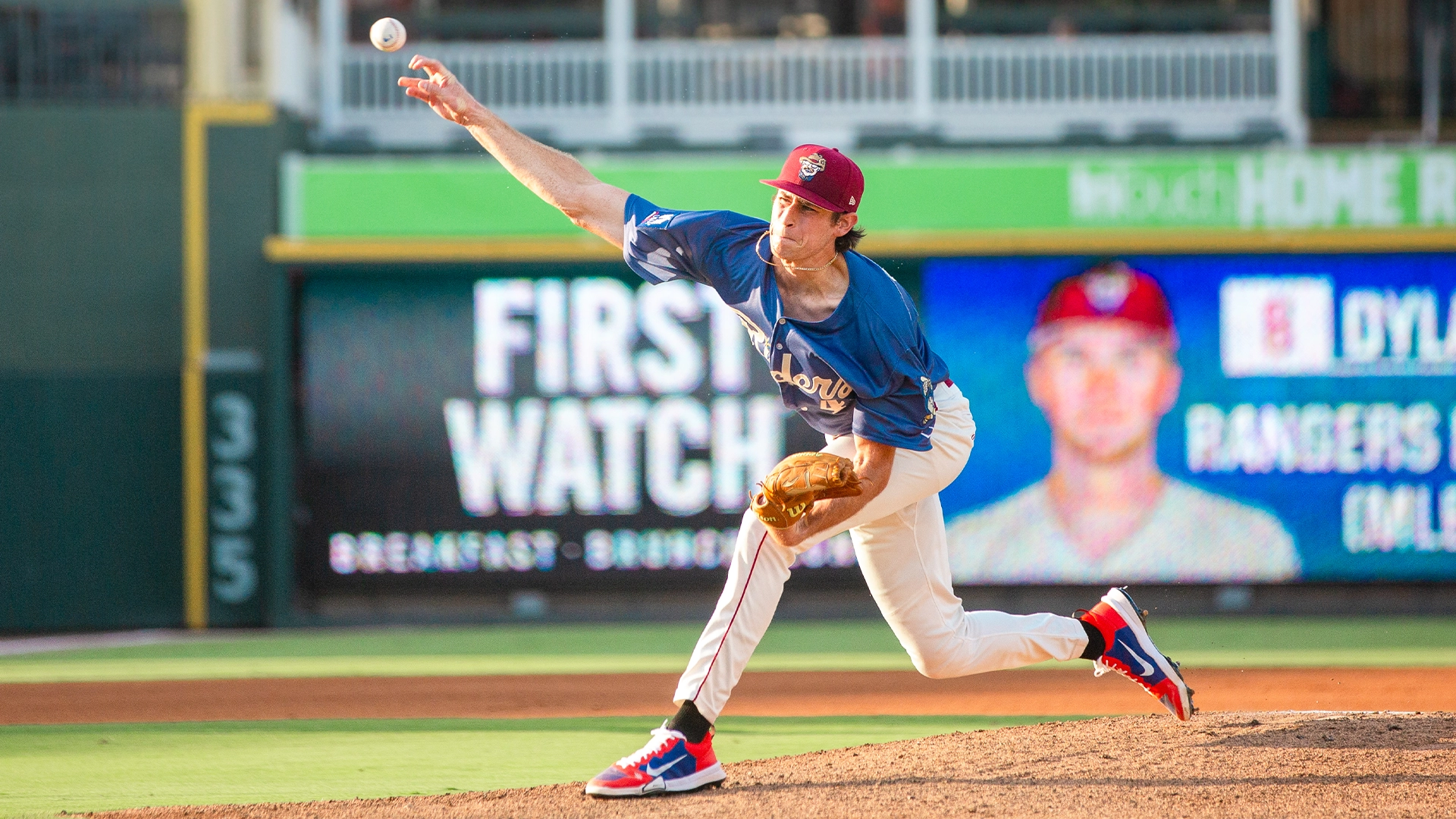
When we talk about throwing velocity, the conversation almost always drifts toward the arm. Shoulder layback, elbow spiral, wrist snap, all the usual suspects. But what if I told you that the most overlooked contributors to velocity are happening from the waist down, long before the arm even gets involved? A 2023 study by Corey Perrett, utilizing Driveline's OpenBiomechanics Project, took a hard look at how lower body kinematics relate to both pitching velocity and bat speed. The findings reinforce something that many of us in the pitching development space have suspected for years: the trail hip and lead knee may be playing a far larger role in velocity production than traditional coaching models have acknowledged. And perhaps more importantly, the way we describe what's happening at these joints might be leading coaches and athletes in the wrong direction entirely.
This study examined a large dataset from Driveline's OpenBiomechanics Project, looking specifically at lower body movement patterns and their relationship to throwing velocity and bat speed. The researchers found that trail hip external rotation velocity post foot contact had the strongest lower body correlation with pitch velocity, with an R value of .26. Now, before you dismiss that as a weak correlation, remember that pitching is an incredibly complex movement with dozens of variables influencing the outcome. Finding any single variable that explains even a quarter of the variance is meaningful.
Higher velocity throwers in this study displayed more internal rotation of the trail hip at foot contact, which the authors attributed to greater hip flexion and pre-loading during the stride phase. These same athletes also demonstrated delayed pelvic rotation, keeping the pelvis closed and facing third base longer than their lower velocity counterparts. This pattern of maintained closure followed by rapid rotation is the hallmark of efficient kinetic chain sequencing, and it showed up clearly in the data.
The lead knee findings were equally compelling. Lead knee extension velocity and magnitude were both associated with higher pitch velocity, which reinforces earlier research on the importance of the front side block. But here's what caught my attention: lead knee extension began prior to foot contact in the higher velocity group. This suggests that the sequencing of when extension initiates, not just whether it happens, may be a defining marker of velocity potential.
Interestingly, when the researchers looked at hitting, pelvis rotation velocity had a clearer link to bat speed than it did in pitching. This highlights how the same body segments can serve different movement priorities depending on the task, a reminder that we can't just copy and paste mechanical principles across skills.
Studies like this can be easily misinterpreted without proper context, and I think this is where coaches and athletes need to be careful. When the authors reference external rotation of the trail hip, they appear to be describing terminal hip extension, which is mechanically aligned with external rotation due to the orientation of the femur in the acetabulum at that point in the delivery. My interpretation is that higher velocity throwers aren't just rotating, they're extending through the trail hip at a faster rate after foot contact. Likewise, some of the observed internal rotation at foot contact may actually reflect hip flexion during stride rather than true rotational positioning.
This distinction matters because if a coach reads "more internal rotation at foot contact" and starts cueing athletes to actively rotate their trail hip inward, they might be creating a movement pattern that doesn't actually match what high velocity throwers are doing naturally. The mechanics we observe are often the consequence of other movements happening upstream, not isolated positions to be trained in a vacuum.
The delayed pelvic rotation finding connects directly to a 2025 study on Australian pitchers that found later trunk rotation relative to the pelvis was linked to higher ball velocity and spin rate. Greater delay between pelvic and trunk rotation peaks was positively associated with velocity, confirming that this sequencing pattern isn't just a quirk of the OpenBiomechanics dataset. It's showing up across populations and research groups.
This sequencing theme is further supported by research from Luera and colleagues, who found that professional pitchers generate more velocity with less relative elbow torque by using greater trunk and pelvis rotation. High school pitchers in that study relied more heavily on the arm, placing them at higher injury risk. When sequencing breaks down, the arm picks up the slack, and that's when we see elevated stress without proportional velocity gains.
The lead knee findings align with Dowling's 2024 research showing that for every one degree increase in lead knee extension, ball velocity increased by approximately 1.1 mph. But the critical nuance from that study was that the efficiency of extension, meaning how well timed and coordinated it was with the rest of the delivery, determined whether elbow stress was mitigated or magnified. Professional pitchers with refined sequencing accessed the velocity benefits without overloading the elbow. High school pitchers with increased knee extension saw improved velocity but also higher elbow torque, likely due to inefficient timing or compensatory mechanics elsewhere in the chain.
Research on lumbopelvic stability adds another layer to this conversation. A 2025 study found that greater separation between pelvic and trunk rotation from foot contact to maximum external rotation was positively correlated with velocity, with an R value of .74. That's a strong relationship. Athletes who could dissociate, maintaining pelvic stability while the trunk lagged behind, threw harder. Those with poor transverse plane control were 2.5 to 2.9 times more likely to fall into a high torque, low velocity pattern.
So what do we do with all of this? First, I think coaches need to shift their attention toward sequencing rather than isolated positions. The trail hip isn't just about how much it rotates, it's about the rate of extension after foot contact and how that extension coordinates with pelvic rotation and trunk delay. Training should emphasize the ability to maintain closure through foot contact and then release that stored energy in a coordinated sequence.
For the lead knee, the timing of extension initiation appears to be as important as the extension itself. Higher velocity throwers in the OpenBiomechanics study began extending prior to foot contact, which suggests they were preparing for ground contact rather than reacting to it. This is a subtle but important distinction that could inform drill selection and cueing strategies.
Research from Glover and colleagues on youth pitchers showed that the drive leg transfers linear power while the stride leg creates rotational power. Both are essential, but they serve different roles. A strong drive leg without stride leg braking leads to poor transfer, while a powerful stride leg without drive leg propulsion limits velocity. Programming should reflect this complementary relationship rather than treating lower body training as a single undifferentiated category.
The fatigue research is also worth considering here. Studies have shown that pelvic rotation velocity drops after as few as 35 pitches, and hip to shoulder separation decreases with it. If the lower body is the engine that drives efficient sequencing, then lower body fatigue monitoring should be prioritized alongside pitch count. An athlete who looks mechanically sound in the first inning but starts leaking rotation by the fourth isn't necessarily making a conscious choice to change their delivery. Their body is simply running out of the resources needed to maintain optimal sequencing.
Finally, I'd encourage coaches to consider how core strength, particularly the obliques, contributes to this picture. Research on adolescent pitchers found that glove side oblique strength was positively correlated with both pelvic and trunk rotation velocity. These athletes didn't necessarily throw harder in that particular study, but the foundation they were building, the ability to rotate faster without the arm paying the price, may be exactly what sets them up for sustainable velocity gains down the road.
The lower body doesn't just support the pitching motion, it drives it. Trail hip extension rate, delayed pelvic rotation, and early lead knee extension all emerged as distinguishing features of higher velocity throwers in this research, and similar patterns have appeared across multiple studies and populations. But the most important takeaway might be interpretive rather than mechanical: what we see on motion capture isn't always what we should cue. The positions and velocities we observe are often downstream effects of coordination strategies that develop over time. Training those strategies, rather than chasing isolated metrics, is where the real opportunity lies.

.jpeg)