New Year’s Holiday Sale: ends december 31st
.png)

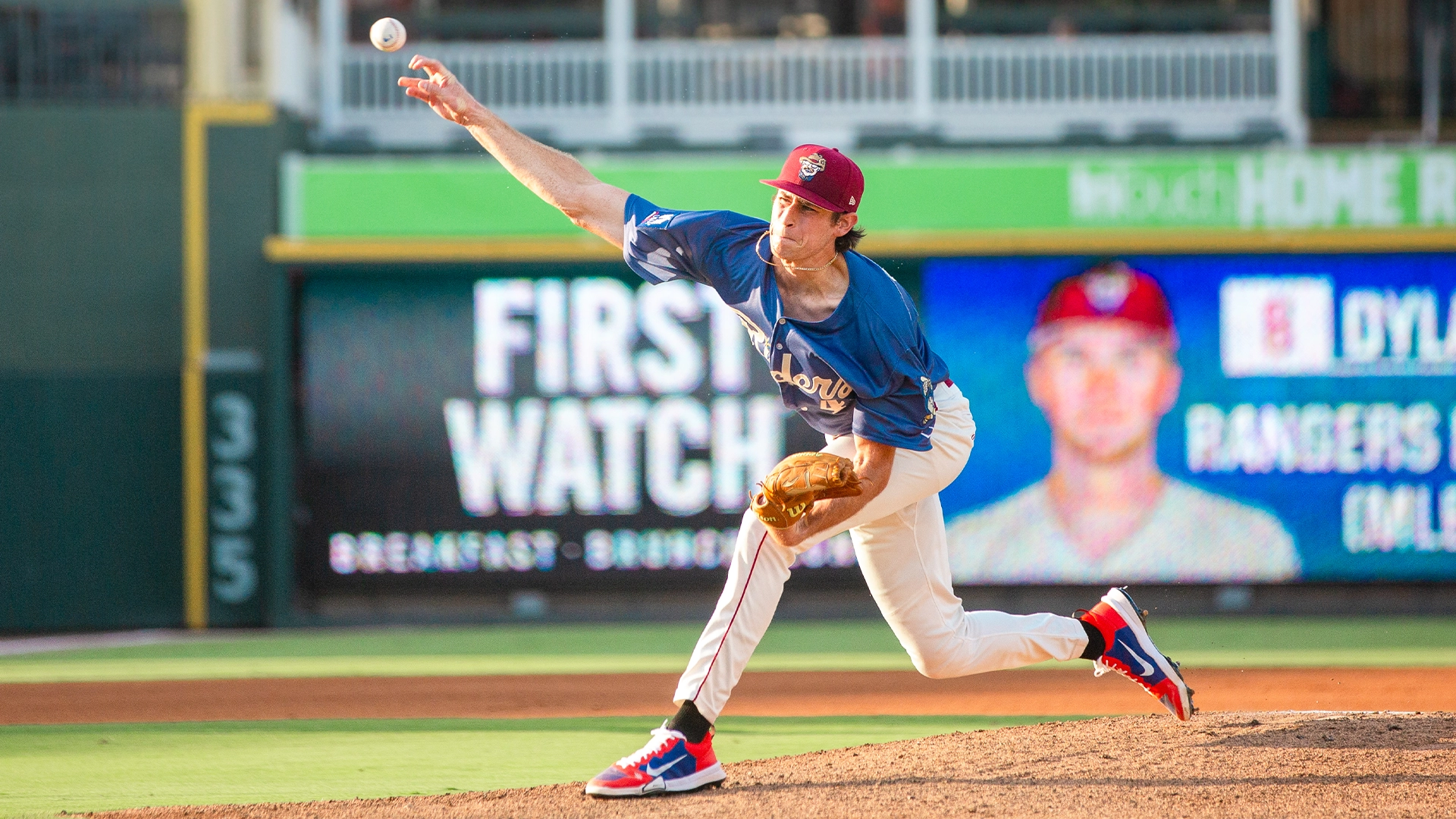
A recent study published in the Journal of Strength and Conditioning Research (Johnson et al., 2025) examined how muscular fatigue affects hip and torso biomechanics in adolescent baseball pitchers. Seventeen high school pitchers threw an average of 35 pitches in a controlled lab session, with pre- and post-measures of hip strength and pitching kinematics.
Even over this short session, researchers found measurable declines in lower-body strength and rotation efficiency. Torso rotation angle at ball release dropped by 1.3° (p = .03), hip-to-shoulder separation decreased by 1.4° (p = .04), and the timing of maximum shoulder internal rotation shifted earlier by 0.7% of the pitch cycle (p = .02)—all markers of reduced kinetic sequencing.
Strength testing confirmed significant decreases in back and lead hip extension, external rotation, and lead hip internal rotation (p < .05), with no change in oblique strength. Regression modeling showed each additional pitch corresponded with a 2.3°/s drop in pelvis rotation velocity (p = .02)—a progressive loss in the motor engine driving velocity and energy transfer.
By around 35–40 pitches, data began to show a bimodal distribution, suggesting a fatigue threshold unique to adolescent pitchers that appears well below current pitch count limits recommended by national guidelines.
The take-home is simple but important: fatigue starts from the ground up. When the hips and torso lose rotational integrity, the upper body is forced to make up the difference. That means the shoulder and elbow experience more torque, and the throwing arm must accelerate later in the kinetic chain—both known risk factors for overuse injury.
These findings align with prior research showing similar fatigue cascades through the kinetic chain. Erickson et al. (2016) and Grantham et al. (2014) both documented mechanical breakdown in pitchers as sessions progressed, even when workloads were moderate. Likewise, Albiero et al. (2022) linked hip strength directly to efficient pelvis rotation and shoulder stress reduction in adolescent pitchers.
What sets Johnson et al. (2025) apart is its identification of this breakdown after only 35 pitches—a practical number many pitchers reach within one inning or a bullpen session. That means fatigue management strategies can’t rely solely on arm metrics or total pitch counts. Instead, they must account for how lower-body fatigue erodes mechanical efficiency before the upper extremity ever fails.
For both baseball and general performance development, this research reframes how we should interpret fatigue. The hips and torso are not simply power generators—they’re transmission systems that dictate the quality of energy transfer through the body. Once they weaken, everything upstream suffers.
In practice, that means:
Whether you’re managing a high school pitcher or developing rotational athletes in other sports, the message is consistent: preserve the base, protect the arm.
Johnson, A.L., Kokott, W., Dziuk, C., & Cross, J.A. (2025). Assessment of muscular fatigue on hip and torso biomechanics in adolescent baseball pitchers. Journal of Strength and Conditioning Research, 39(8), 893–899. DOI: 10.1519/JSC.0000000000005136
Supporting Literature:

.jpeg)