New Year’s Holiday Sale: ends december 31st
.png)

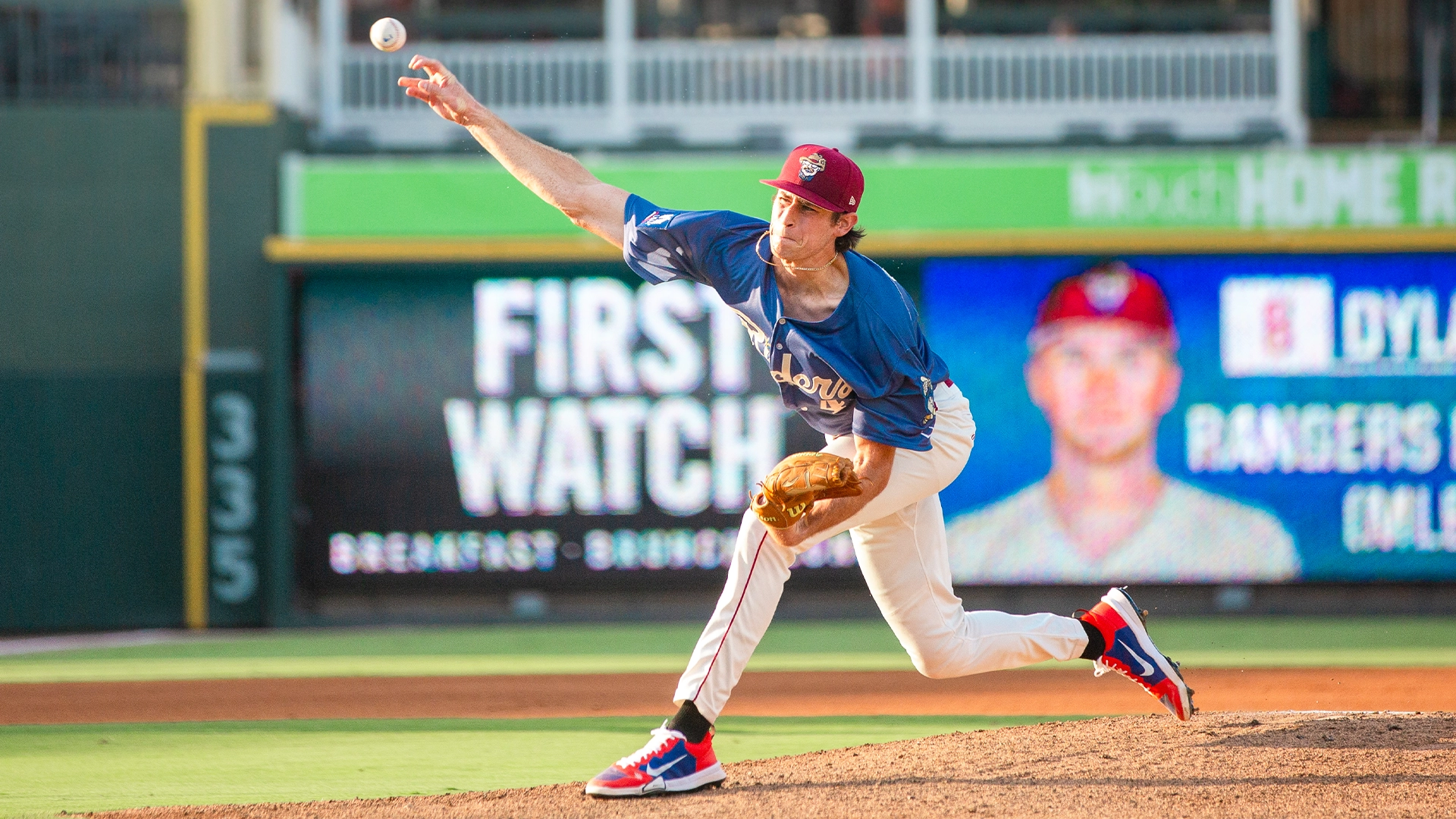
There's a pattern that shows up in baseball every spring, and it doesn't get talked about enough. A pitcher finishes the fall throwing well. Velocity's up. Mechanics feel clean. He spends the winter grinding in the weight room, adding 15 pounds to his squat, tightening up his rotator cuff work, building explosive power through his lower half. By February, he's in the best shape he's been in. Then the season starts. Games pile up. Bullpens replace lifting sessions. Arm care becomes reactive instead of proactive. By June, his fastball is sitting two miles per hour slower than it was in March. His legs feel heavy. The weight room becomes something he thinks about but never actually gets to. And by the time summer rolls around, the strength he built over three months in the off-season has quietly disappeared, not because he got weaker in some dramatic, noticeable way, but because he stopped doing the thing that made him stronger in the first place.
A 2024 study published in the Journal of Sports tracked exactly this phenomenon. Researchers followed 27 untrained women through a 36-week protocol designed to answer a simple question: what happens to your gains when you stop training? The first 12 weeks were straightforward. The participants lifted and did aerobic work three times per week. Leg press strength increased by 28.7 percent. Quad muscle size grew by 13.1 percent. Aerobic power jumped by 20.4 percent. The control group, who did nothing, saw no changes. Predictable. The next 12 weeks tested what happened when training frequency dropped. One group trained once per week. Another trained once every two weeks. A third group stopped training entirely. The weekly group preserved 100 percent of their strength gains and 99.4 percent of their muscle size. The every-other-week group held onto 95.6 percent of strength and 94.1 percent of muscle. Aerobic power declined slightly in both groups, but the losses were manageable. The group that stopped training? They lost 15.5 percent of their strength, 7.6 percent of their muscle, and 15.8 percent of their aerobic capacity. But the most revealing part came in the final 12 weeks, when everyone stopped training. All groups, even the ones that had been training once per week, returned to baseline. Strength, muscle, aerobic power, everything they had built over six months, gone.
When The Weight Room Disappears, So Does Everything Else
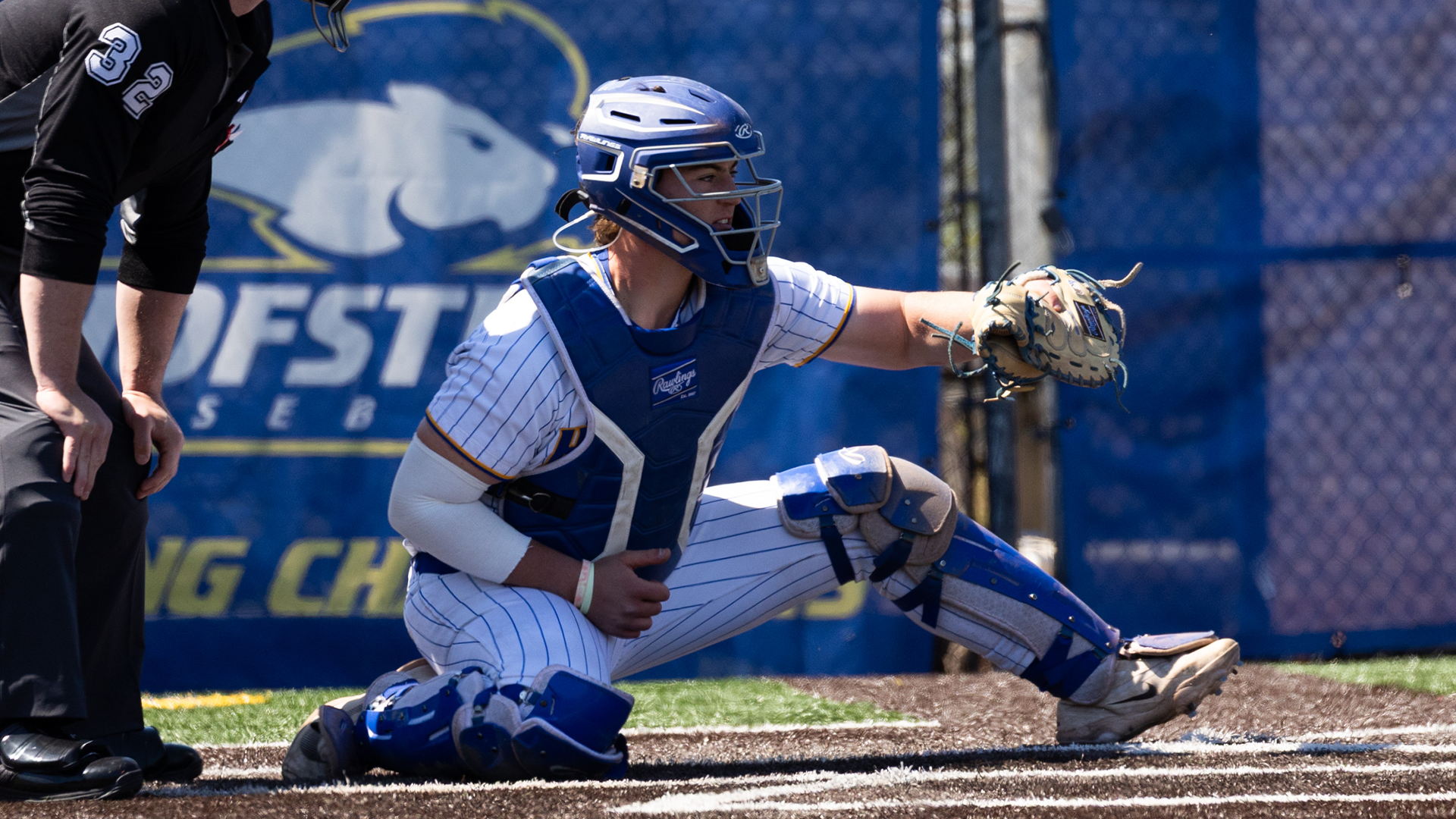
To be honest, this reminds me of watching collegiate pitchers navigate a spring season. They come out of winter break looking like different athletes. Stronger. More explosive. Their deliveries feel powerful. Then conference play starts. Midweek games stack on top of weekend series. Lifting gets pushed to Mondays, then it gets skipped because they're sore from Sunday. By May, they're not training, they're surviving. And the qualities that made them throw harder in February, the leg strength, the rotational power, the posterior chain development, start eroding. Not all at once. Not in a way that's obvious day to day. But incrementally, week by week, until the accumulation becomes undeniable.
We know from other research that even small amounts of training can slow that decay. The study on reduced training frequency showed that one session per week was enough to preserve nearly all strength and muscle gains for 12 weeks. Once every two weeks still held onto 95 percent. But zero sessions? That's where the floor drops out. And the scary part is how fast it happens once you cross that threshold. Fifteen percent strength loss in 12 weeks doesn't sound catastrophic until you realize that strength underpins almost everything else, power output, movement quality, tissue resilience, injury resistance. A pitcher who loses 15 percent of his lower body strength isn't just weaker in the gym. His drive leg can't generate the same force. His stride leg can't stabilize as effectively. The kinetic chain that transfers energy from the ground through the pelvis, trunk, and arm starts leaking efficiency at every segment. And the arm, sitting at the end of that chain, absorbs the difference.
There's also evidence that this phenomenon isn't limited to general populations or untrained individuals. A 2024 study on NCAA Division I pitchers examined what happened when athletes lost access to strength training during an eight-week fall season. Twelve pitchers followed a structured throwing program but had no weight room access. Ball velocity, arm slot, arm speed, and elbow torque were measured before and after. The results were striking. Velocity dropped significantly. Elbow torque, the stress placed on the UCL during throwing, didn't change in proportion to the velocity loss, meaning the pitchers were producing less output while the joint was still absorbing high loads. Mechanics started drifting. Arm slot altered slightly. The absence of strength work didn't just make them weaker, it made them less efficient. And inefficiency, in a movement as violent and repetitive as pitching, is how injuries happen.
Sixty-Two Percent Of UCL Tears Happen In The First Three Months
One of the most compelling pieces of evidence for why off-season training matters comes from research on when injuries actually occur. A study analyzing 170 Major League Baseball UCL injuries between 2007 and 2014 found that 62 percent of tears happened in the first three months of the season. Not in July, when workloads are highest. Not in September, when fatigue has accumulated. In March, April, and May, when pitchers are supposed to be fresh. The researchers noted that velocity differences between injured and uninjured pitchers were minimal, less than one mile per hour. The issue wasn't that injured pitchers were throwing harder. It was that they weren't ready for the loads they were being asked to handle. Poor off-season ramp-up strategies, inadequate preparation, and insufficient tissue tolerance left them vulnerable the moment competition intensity spiked.
To be honest, this reminds me of high school multi-sport athletes who roll straight from basketball season into baseball without taking time to rebuild the physical qualities that protect the arm. The body isn't ready. The elbow pays the price. And the pattern is consistent across levels. Collegiate pitchers who don't train in the fall show mechanical drift and velocity loss by spring. Professional pitchers who don't maintain strength work in the off-season tear their UCLs in April. The mechanism is the same. When you stop training, the qualities that buffer against injury, strength, power, coordination, tissue resilience, start disappearing. And when those qualities are gone, the margin for error shrinks to nothing.
We also know from research on fatigue that even during the season, failing to maintain training creates compounding problems. A 2025 study on balance training in collegiate pitchers found that both the intervention group and the control group lost between 4 and 8 miles per hour of velocity over six weeks, despite one group doing balance work three times per week. Elbow varus torque dropped by 38 to 40 Newton-meters in both groups. The balance training had zero effect. But the velocity and torque losses were real. The authors suggested either in-season detraining, fatigue accumulation, or programming failures. The most likely explanation? The athletes weren't doing enough to preserve the physical qualities that drive performance. Balance drills don't maintain explosive power. And explosive power, particularly through the lower body, is what generates velocity.
The Lower Body Is Where Velocity Lives
There's a reason strength loss matters so much for pitchers, and it's not because the arm gets weaker. It's because the legs stop working. A 2025 study on youth pitchers found that drive-leg forces transfer linear power up the kinetic chain while stride-leg forces create rotational power. Both are essential. Peak forces matter, but impulse, the force applied over time, was a stronger predictor of how energy flowed through the system. Athletes need explosive actions from both legs, and they need the ability to sustain and control those forces through the entire delivery. If the legs can't produce force, the trunk compensates. If the trunk compensates, the arm works harder. And when the arm works harder than it should, repeatedly, under fatigue, across weeks and months, that's how elbows break down.
We also know from research on youth athletes that lower body power is one of the strongest predictors of performance. A 2025 study on 49 eleven-year-olds found that standing broad jump distance and hip external rotation strength were the two best predictors of batted ball velocity, even after controlling for height and weight. Each four-inch increase in broad jump distance correlated with a 1.4 mile-per-hour increase in exit velocity. The principle is the same for pitching. Lower body power drives the system. If you lose 15 percent of your leg strength over 12 weeks because you stopped training, you're not just weaker in the squat rack. You're less explosive on the mound. Your drive leg doesn't push as hard. Your stride leg doesn't stabilize as effectively. And the velocity you built in the winter starts disappearing in the spring.
The detraining study showed that even minimal training, once per week, was enough to preserve nearly all gains. But there's a threshold. Once you drop below that minimal stimulus, losses accelerate. And once you stop entirely, everything returns to baseline. The group that trained weekly during the middle 12 weeks looked fine. They held onto their strength, their muscle, most of their aerobic capacity. But when they stopped training in the final phase, they lost it all. The same pattern held for the every-other-week group. They had preserved 95 percent of their gains during the reduced-frequency phase. But once training stopped completely, those gains evaporated. The message is clear. You can reduce volume. You can reduce frequency. You can train less than you did in the off-season. But you can't stop. Because when you stop, the clock starts ticking, and the adaptations you spent months building start disappearing faster than you realize.
What Minimal Training Actually Looks Like
The practical application here isn't complicated. In-season training doesn't need to look like off-season training. It doesn't need to be four or five days a week. It doesn't need to be high-volume or high-intensity across every session. But it needs to exist. And it needs to target the qualities that matter, lower body power, rotational strength, posterior chain development, shoulder stability. Research on in-season training in high school pitchers found that twice-weekly sessions combining plyometrics and resistance training produced velocity gains of 3.7 miles per hour over four weeks. The athletes didn't train more. They trained smarter. And they improved, not just maintained, during the competitive season.
There's also evidence that low-load strategies can preserve strength and capacity when traditional high-load training isn't feasible. A 2023 study on blood flow restriction training in collegiate pitchers found that adding BFR to rotator cuff work, just twice per week at 20 percent of isometric maximum, led to significantly greater shoulder mass, strength, and endurance compared to controls who did the same exercises without the cuffs. The BFR group gained 227 grams of shoulder mass versus 75 grams in the control group. Endurance capacity increased by 190 kilograms versus 90 kilograms. And critically, pitching mechanics were preserved in the BFR group but changed in the controls. The intervention didn't add volume or disrupt throwing schedules. It just provided enough stimulus, under metabolic stress, to maintain and even build the qualities that protect the arm.
Another study on BFR training for hamstrings found that low-load BFR at 30 percent of one-rep max produced eccentric strength gains comparable to traditional high-load training at 80 percent. For athletes managing high throwing workloads or navigating early-phase rehab, BFR offers a way to maintain strength and tissue capacity without the mechanical or neurological cost of heavy loading. The principle is universal. You don't need to replicate off-season training volume during the season. But you need enough stimulus to prevent decay. And the threshold for "enough" is surprisingly low, once per week appears sufficient for strength and muscle preservation, as long as the programming is intentional and the intensity is adequate.
We also know from research on velocity loss thresholds that how you train matters as much as whether you train. A 2023 systematic review found that while strength gains were consistent across all levels of fatigue, power output declined significantly when velocity loss exceeded 25 percent during training. Every 10 percent increase in velocity loss boosted hypertrophy but reduced explosive performance by up to 4 percent. For baseball athletes, that tradeoff is critical. Pitchers and hitters don't need maximum hypertrophy during the season. They need to move fast, often, and under fatigue. Training that drives excessive fatigue, even if it builds muscle, degrades the explosive qualities that actually drive performance. The detraining study showed that aerobic power declined faster than strength or muscle when training frequency dropped. That suggests conditioning, the ability to produce force repeatedly without degradation, requires more frequent stimulus than raw strength. For pitchers, that might mean prioritizing lower body power endurance, rotational stamina, and repeated-effort capacity over absolute strength during the season.
The Cost Of Doing Nothing Is Higher Than You Think
The most striking finding in the detraining study wasn't what happened during the reduced-frequency phase. It was what happened when training stopped entirely. Even the group that had been training once per week, the group that had preserved 100 percent of their strength gains for 12 weeks, lost everything when they stopped. Twelve weeks of no training, and they were back where they started. All the work. All the adaptation. All the time spent in the gym. Gone. And the timeline matters. Twelve weeks is one competitive season. A high school season runs from February to May. A college season runs from February to June. If an athlete stops training in March and doesn't pick it back up until June, they're operating in the same window where this study showed complete reversal of gains.
There's also evidence that the losses aren't linear. The every-other-week group in the detraining study preserved 95 percent of their gains during the middle phase. But when they stopped training entirely, they didn't just lose the remaining 5 percent. They lost everything. That suggests there's a cliff. Below a certain threshold of training frequency, decay accelerates. And once you hit zero, the floor drops out. The group that stopped training during the middle phase lost 15.5 percent of their strength in 12 weeks. But when the weekly and bi-weekly groups stopped training in the final phase, they lost more than 15 percent. They lost it all. The implication is that the longer you maintain some level of training, the harder it is to come back once you stop. Or more accurately, the faster you lose what you built.
We know from research on lower body power that these losses compound. If your legs get weaker, your ability to generate force through the drive leg drops. If your rotational power declines, your ability to transfer energy through the trunk decreases. If your posterior chain strength fades, your ability to decelerate and stabilize diminishes. All of these deficits show up in the delivery. Not as isolated problems, but as systemic inefficiencies that force the arm to compensate. And compensation, under high-velocity, high-repetition demands, is how injuries happen. The pitcher who stops training in March might not feel weaker in April. But by June, when velocity has dropped and mechanics have drifted and the elbow starts aching after every outing, the deficit is undeniable.
What You Should Be Doing Instead
The practical takeaway here is straightforward. If you're a baseball athlete, you need to train during the season. Not as much as you train in the off-season. Not as intensely. But you need to maintain some level of stimulus, ideally once per week, focused on the qualities that drive performance and protect against injury. Lower body power. Rotational strength. Posterior chain development. Shoulder stability. These aren't accessory qualities. They're the foundation of everything that happens on the mound or in the box. And when they erode, everything else follows.
For pitchers, the priorities are clear. Preserve leg strength through compound lower body movements, squats, deadlifts, lunges, split squats. Maintain rotational power through medicine ball work, resisted rotations, and anti-rotation exercises that challenge the obliques and trunk stabilizers. Build or preserve shoulder capacity through low-load, high-stimulus strategies like BFR or through progressive rotator cuff strengthening that doesn't interfere with throwing. And monitor the qualities that matter, broad jump distance, vertical jump height, rotational medicine ball throws, grip strength, so you know when decay is starting before it shows up in velocity loss or mechanical drift.
The detraining study showed that once per week was enough to hold onto everything for 12 weeks. Twice per week is probably better, and research on in-season training in high school pitchers supports that frequency. But the floor is clear. Zero sessions per week leads to rapid, complete reversal. And if you're planning to take the summer off after the season ends, or if you're a college athlete who stops training in May and doesn't start again until September, you're operating in the same window where this study showed total loss of adaptation. By the time fall ball or winter training starts, you're starting from scratch. And starting from scratch, when your competition spent the summer maintaining what they built, puts you behind before the season even begins.
The Part No One Wants To Hear
Most athletes, most coaches, most programs, treat in-season training like an afterthought. Something you do if there's time. Something you skip when games pile up or when fatigue accumulates. But the research is clear. When you stop training, you start losing. Fifteen percent of your strength in 12 weeks. More if you go longer. And once the season ends, if you take time off entirely, everything you built disappears. The detraining study tracked untrained women in a lab. But the principle applies universally. Adaptations require stimulus. When the stimulus stops, the adaptations reverse. And the reversal is faster, and more complete, than most people realize. The pitcher who grinds through winter, builds his squat, adds explosive power, tightens up his rotator cuff, and then stops training in March isn't maintaining. He's regressing. And by June, the strength he built is gone. By August, if he took the summer off, everything is gone. And next winter, he starts over. That's not a training cycle. That's a treadmill. And the cost isn't just lost time. It's lost performance, lost durability, and increased injury risk when the qualities that protect the arm disappear and the arm is left to absorb forces it was never meant to handle alone.
References
Mpampoulis T, Stasinaki AN, Methenitis S, et al. Effect of Different Reduced Training Frequencies after 12 Weeks of Concurrent Resistance and Aerobic Training on Muscle Strength and Morphology. J Sports (Switzerland). 2024. PMID: 39058089.
UCL Injuries Study. When Do UCL Injuries Occur The Most? Orthop J Sports Med. 2016.
Hoffmann GE, Ganz S, Aguinaldo AL. Effects Of A 6 Week Balance Training Program On Throwing Velocity And Joint Kinetics In Collegiate Baseball Pitchers. Med Sci Sports Exerc. 2025.
Gdovin JR, Hogan B, Williams CC. Limiting Access to Resistance Training Equipment During the Off-Season: The Impact on Collegiate Pitching Metrics. J Strength Cond Res. 2024. PMID: 39495235.
Kim J, Jaber H, Yim J. Comparison of the Effects of Compound Training, Plyometric Exercises, and Kettlebell Exercises on Strength, Power, Dynamic Balance, and Pitched Ball Velocity in 30 Male High School Baseball Pitchers Aged 16-19 Years. Int J Med Sci Monit. 2024. PMID: 39118306.
Lambert BS, Hedt C, Ankersen JP, et al. Rotator Cuff Training with Upper Extremity Blood Flow Restriction Produces Favorable Adaptations in Division IA Collegiate Pitchers: A Randomized Trial. J Shoulder Elbow Surg. 2023. PMID: 36933646.
Jones MJ, Dominguez JF, Macatugal C, et al. Low Load With BFR vs. High Load Without BFR Eccentric Hamstring Training Have Similar Outcomes on Muscle Adaptation. J Strength Cond Res. 2022.
Bordelon NM, Agee TW, Wasserberger KW, et al. Field-Testing Measures Related to Youth Baseball Hitting Performance. J Strength Cond Res. 2025. PMID: 39874526.
Jukic I, Pérez Castilla A, García Ramos A, et al. The Acute and Chronic Effects of Implementing Velocity Loss Thresholds During Resistance Training: A Systematic Review, Meta-Analysis, and Critical Evaluation of the Literature. J Sports Med. 2025. PMID: 36178597.
Glover MA, Mylott JA, Gaba A, et al. The Impact of Drive Leg Impulse and Slope on Throwing Velocity and Kinematics in the Competitive Throwing Athlete. J Biomech. 2025. PMID: 39101547.

.jpeg)